
With today being the last day of 2025, I thought I would look back at one last game from 1985.
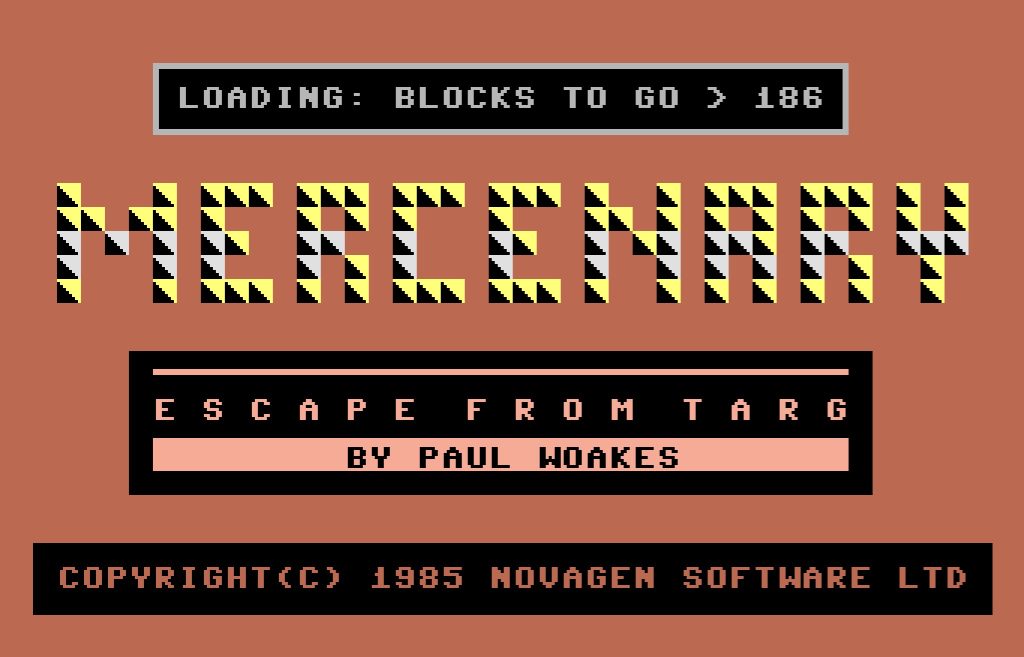
40 years ago, Mercenary was a game-changer. While most titles of the era relied on 2D sprites and scrolling backgrounds, Mercenary introduced players to an entire world—or rather, a city—through a unique first-person perspective on an alien planet. Sure, the 3D visuals were primitive, with crude wireframe vector graphics depicting the alien landscape, but this was over a decade before first-person games became commonplace on home computers. Mercenary truly was a glimpse into the future of gaming.
A Cinematic Introduction
You play as a pilot en route to the Gamma System (an early hint at the events of Mercenary II: Damocles (spoilers!). The game begins with you hurtling through space, unable to control your ship, simply watching as stars blur past while your Novadrive propels you through the void. Your onboard computer, Benson, delivers ominous updates: the ship, Prestinium, has sustained conflict damage.
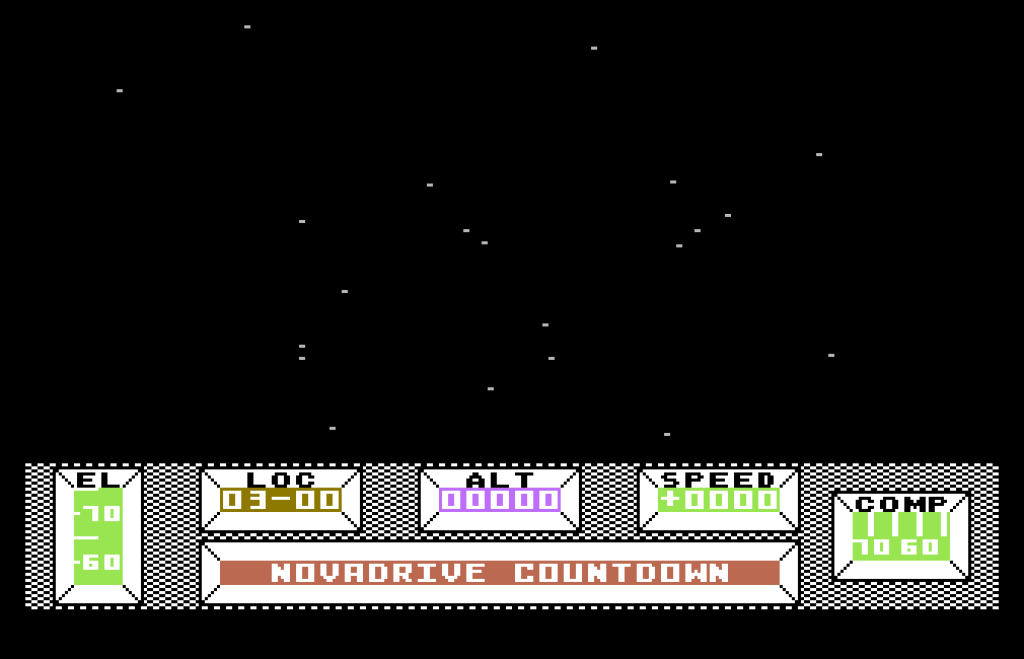
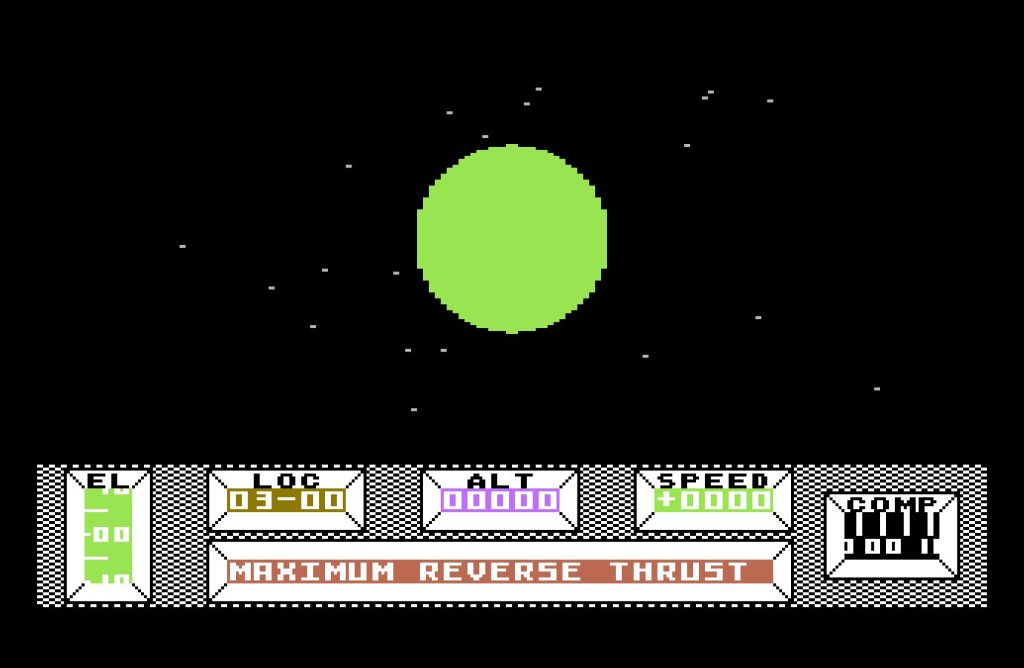
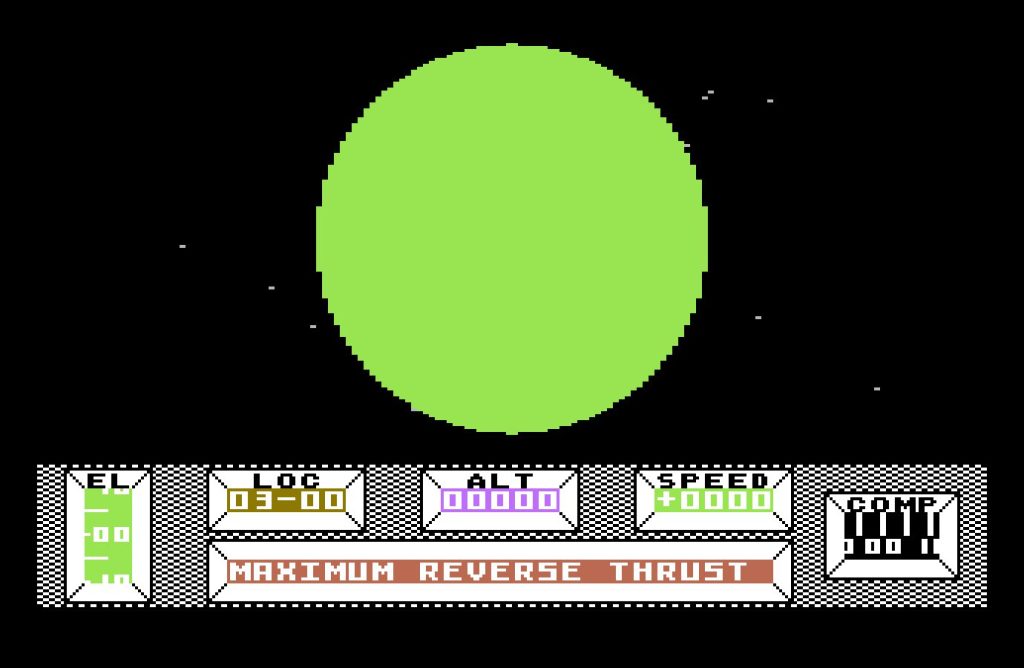
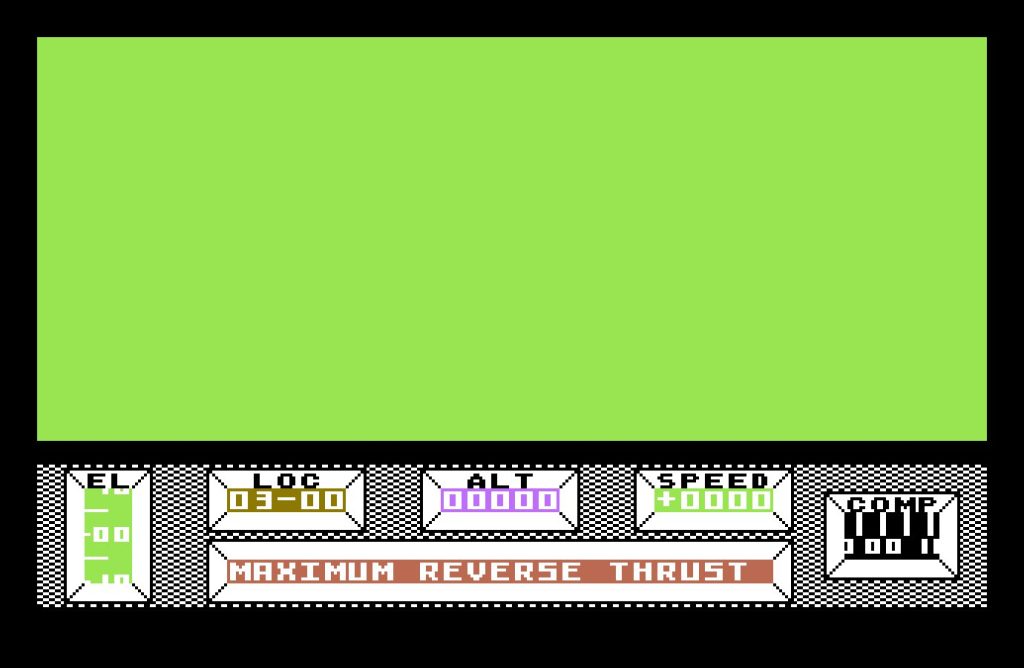
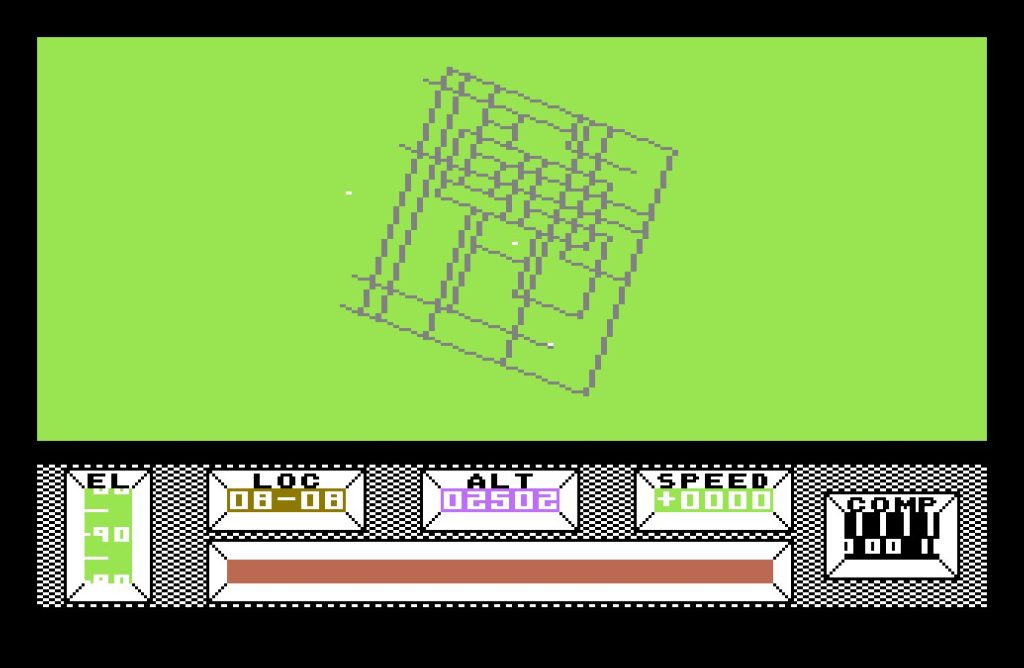
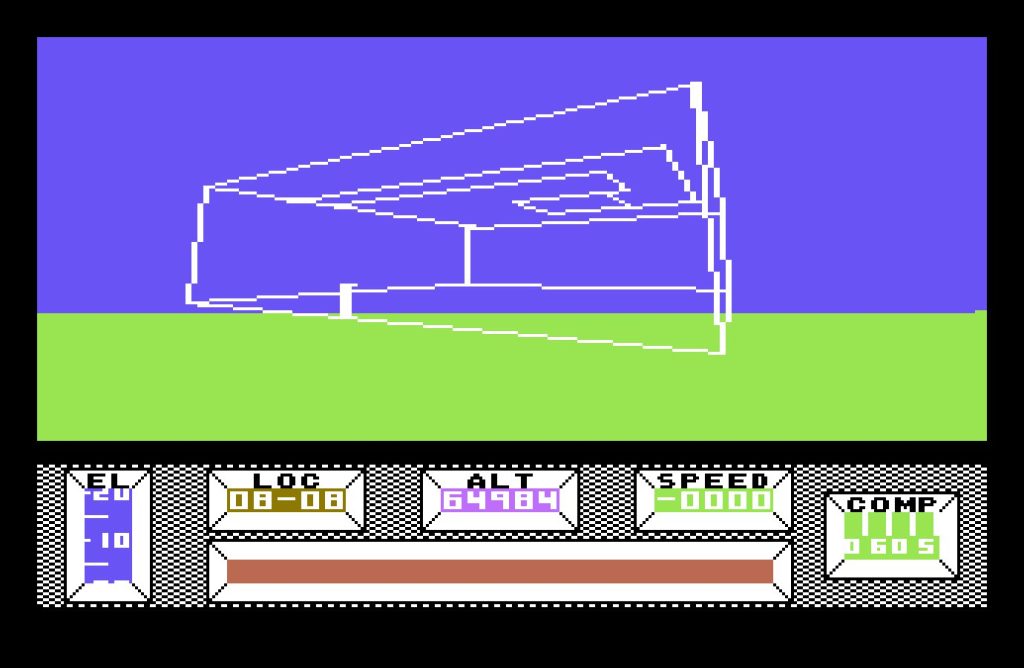
This intro sets the scene brilliantly. In 1985, cutscenes were a rarity, yet Mercenary opens with a scripted sequence that pulls you in. Benson soon informs you that the ship’s guidance system is failing, and you’re on a collision course with the planet Targ. As the Novadrive disengages and Benson attempts to activate reverse thrusters, the planet looms ever larger. The green landscape fills your screen, a sprawling road network rushes toward you—until CRASH!
Welcome to Targ
From this point on, you’re in control. Your ship has crash-landed in Central City, and the game unfolds from a first-person perspective. You can turn, move forward and backward, and explore in full 3D—a rare level of freedom for the time. Conveniently, you’ve crashed near an airfield where a ship awaits on the landing pad. Benson informs you that it’s for sale. You now face your first real choice: buy the ship for 5,000 credits or steal it. But be warned—stealing has consequences.
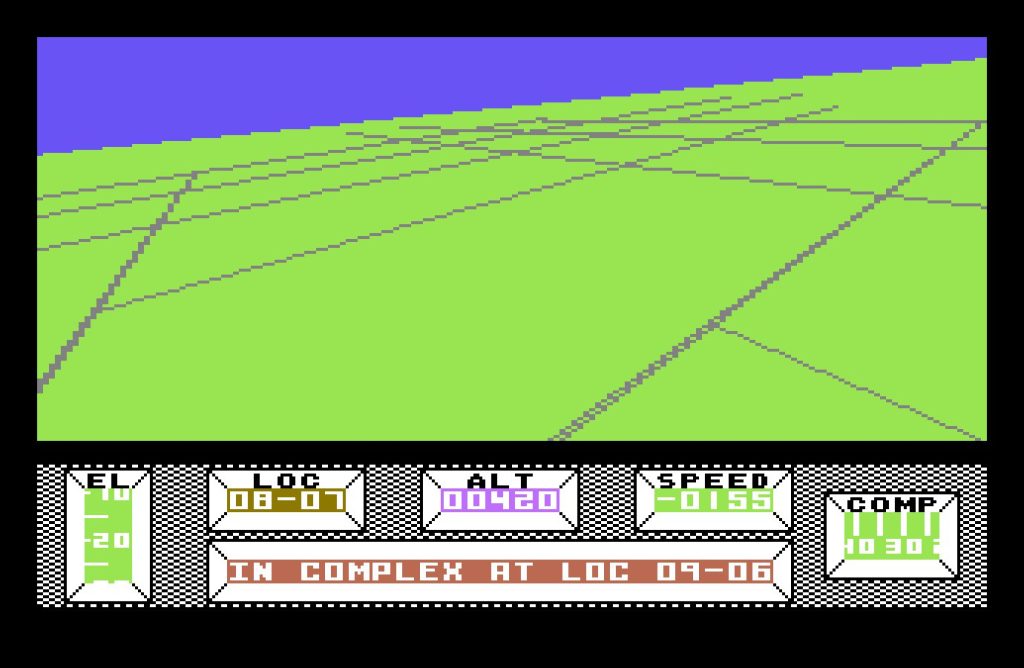
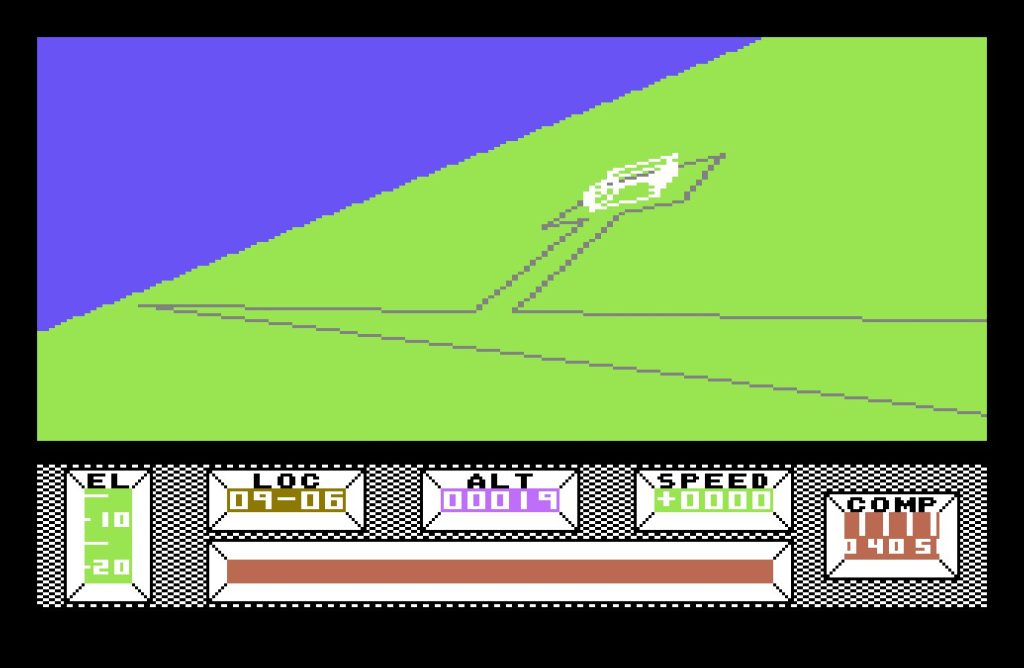
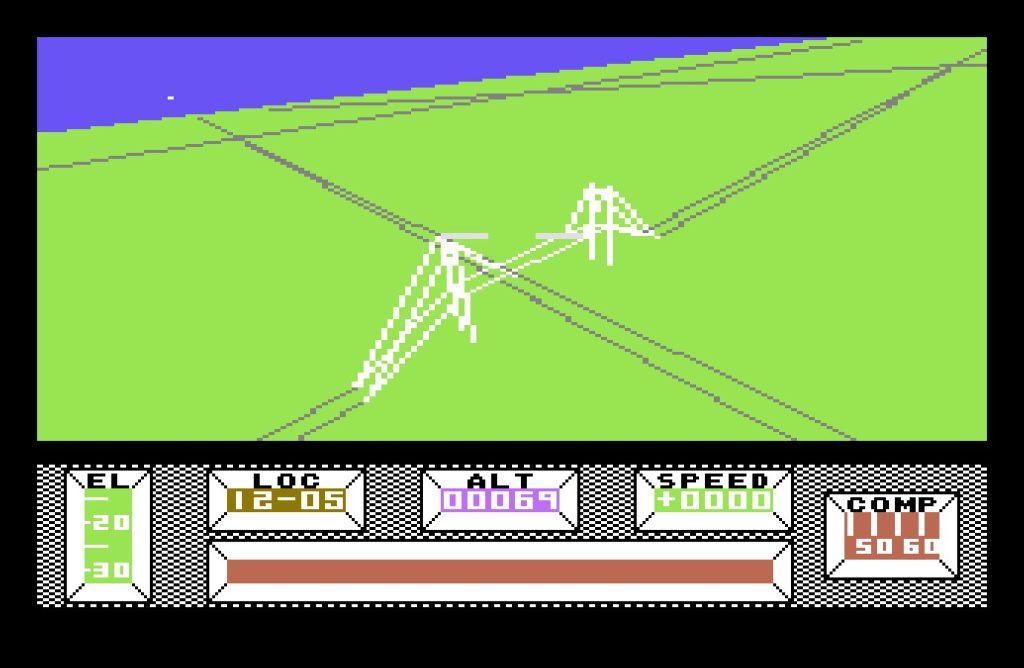
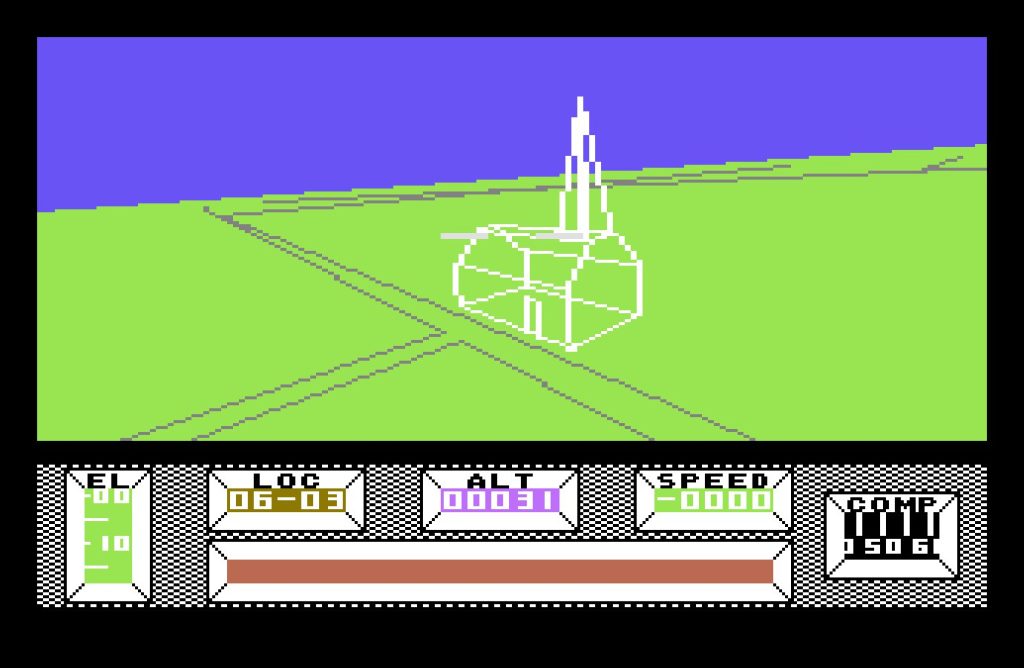
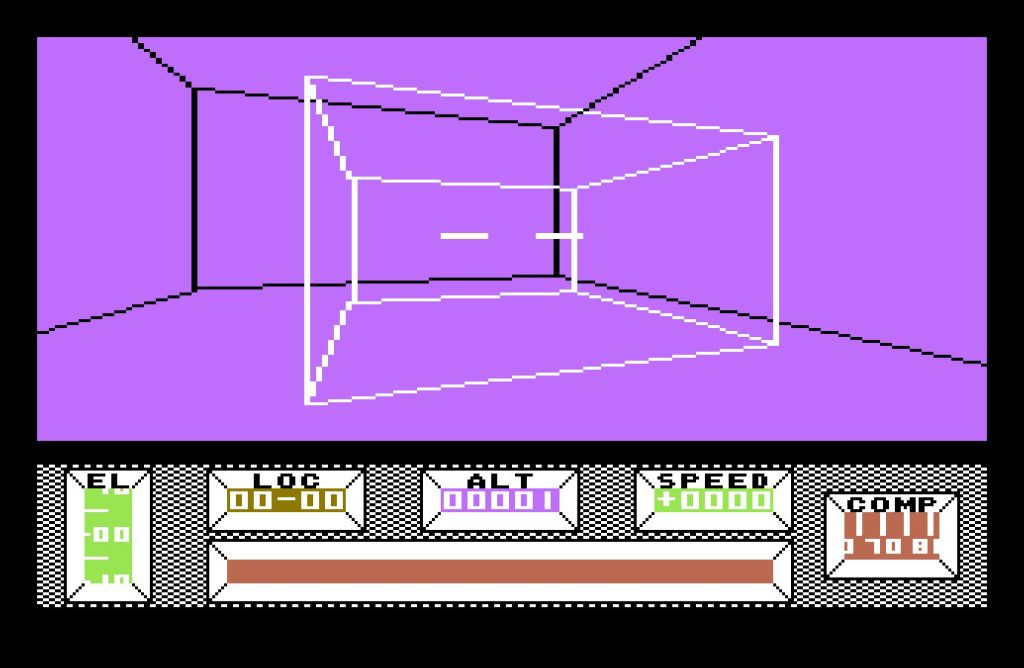
The bulk of the game takes place in Central City, a vast, deserted metropolis built on a 16×16 grid. Each location is marked with a grid reference, displayed at the bottom of the screen, along with a compass—an essential tool, as it’s easy to lose your bearings. The crash site, at location 08-08, serves as your starting point, but you’re free to roam. Various structures from bridges, monuments, a stadium, and even a pub amongst many others dot the cityscape. Though rendered in wireframe vectors, the architecture is striking, especially for an 8-bit game.
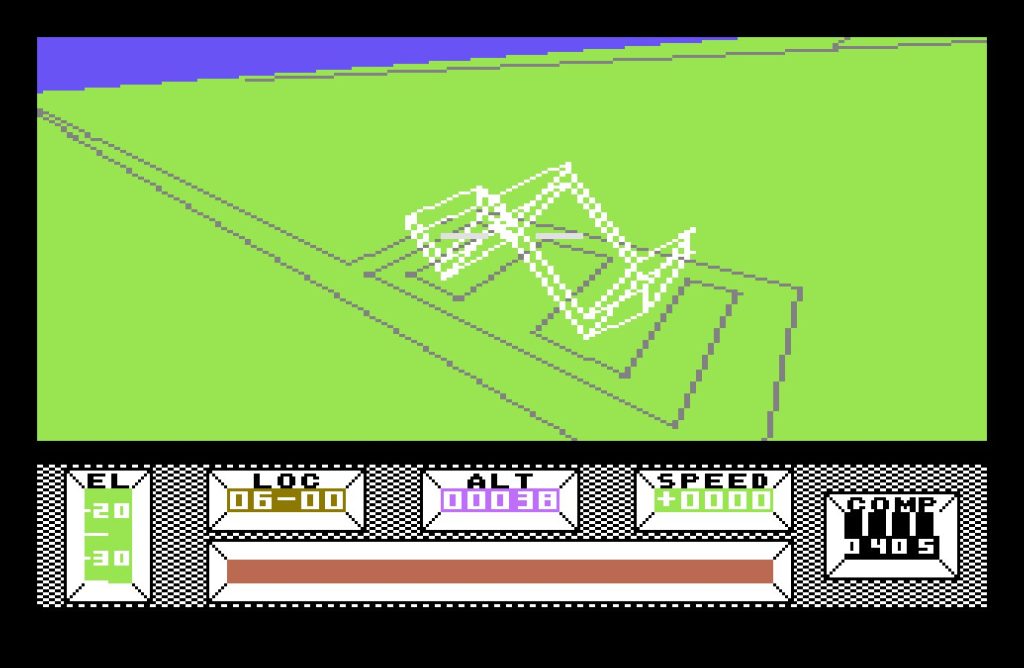
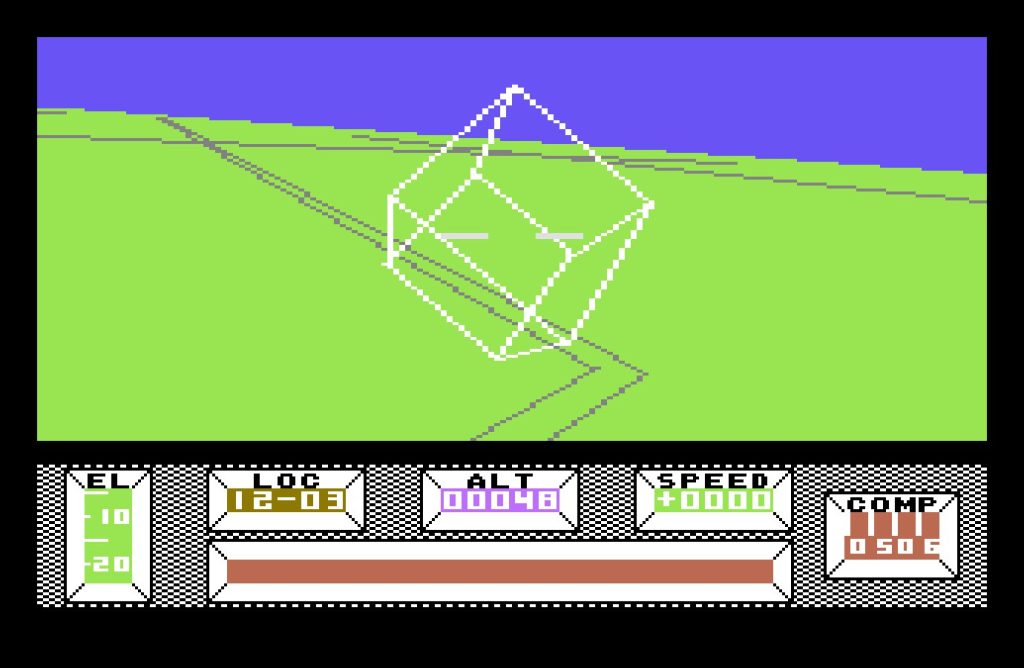
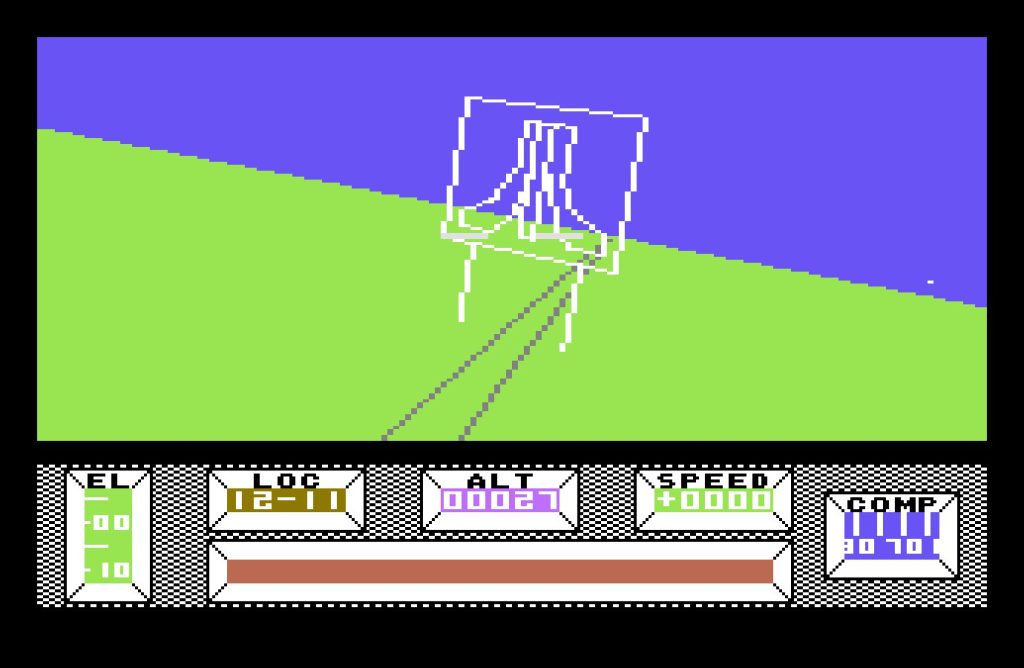
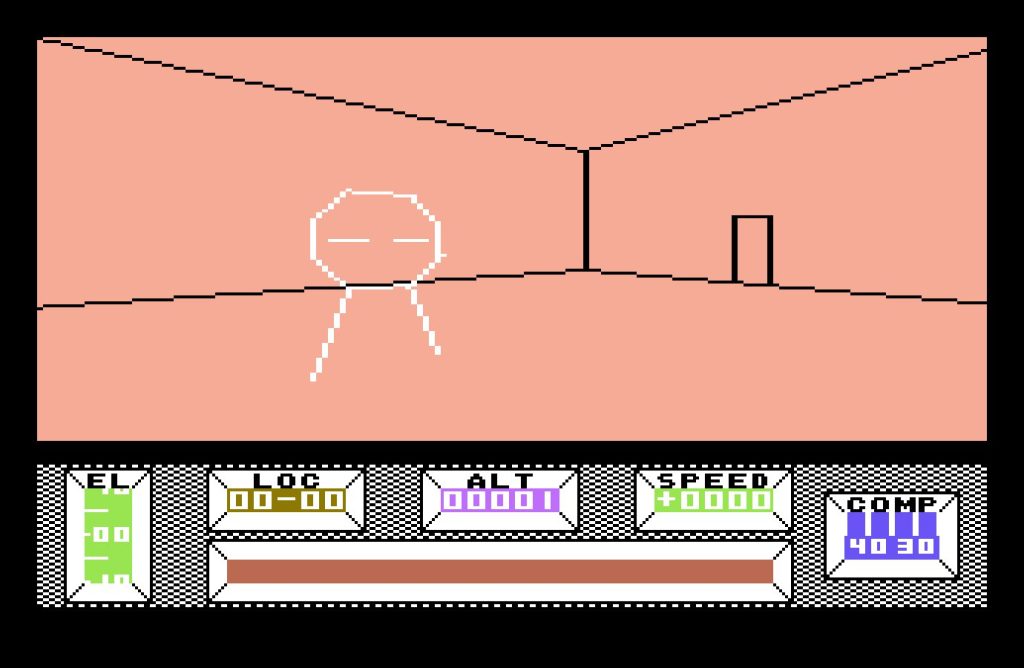
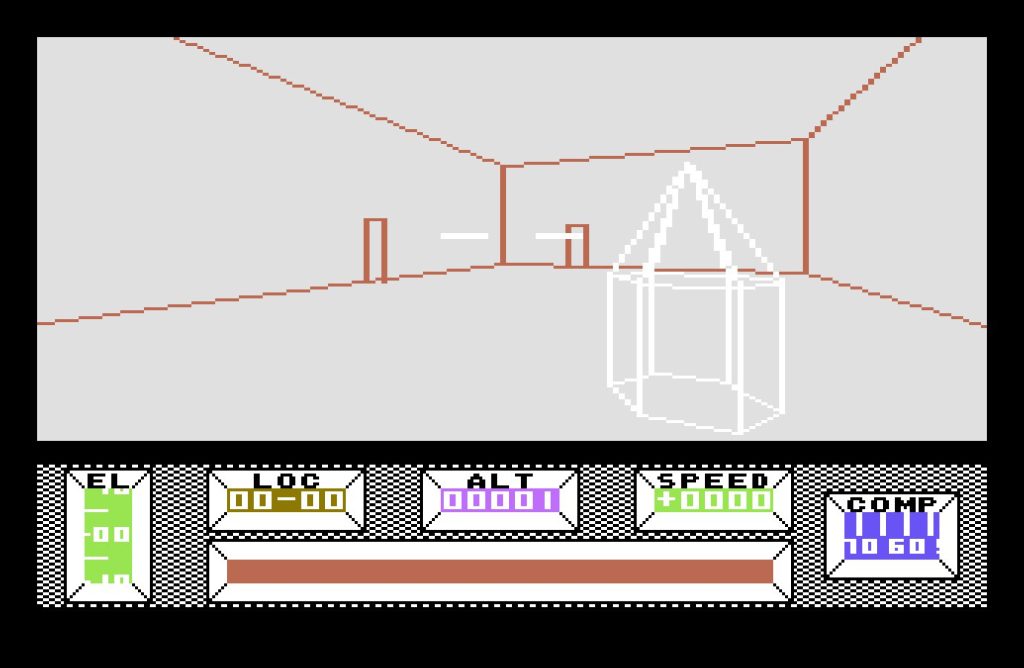
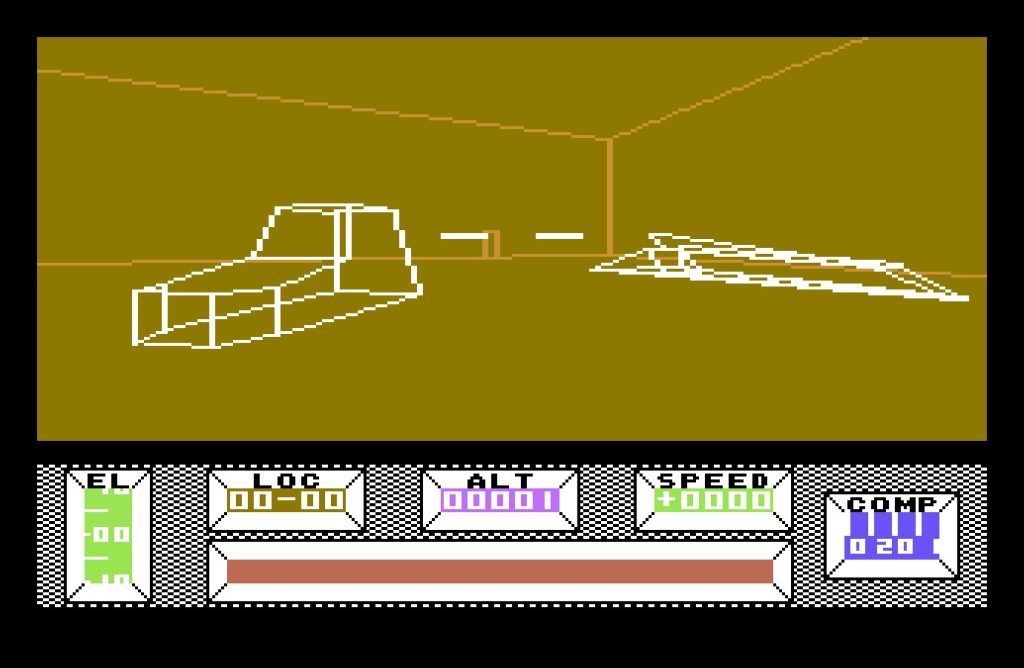
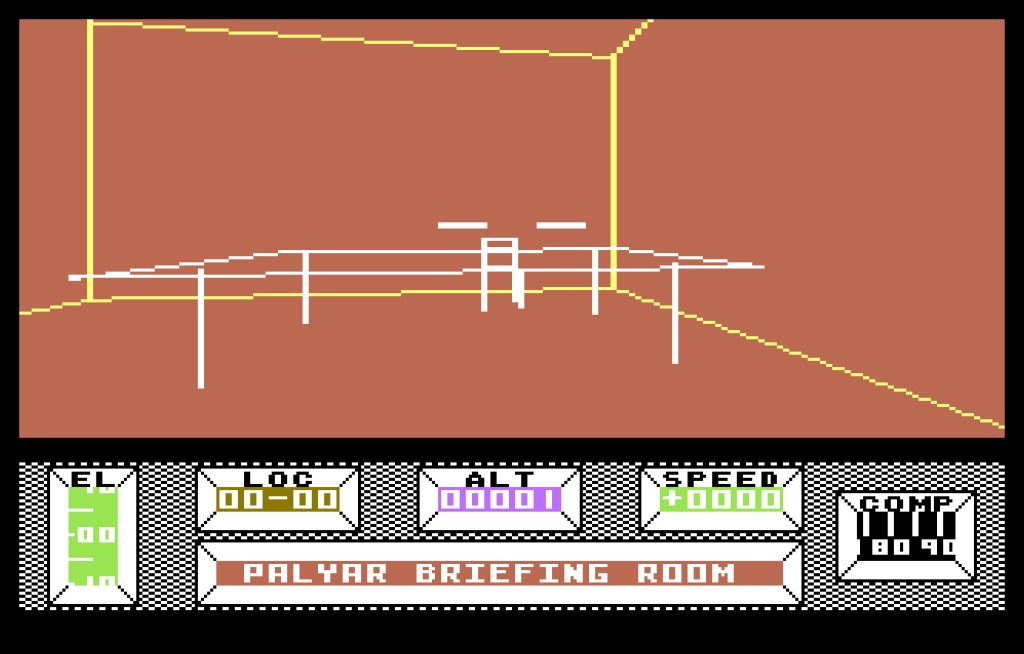
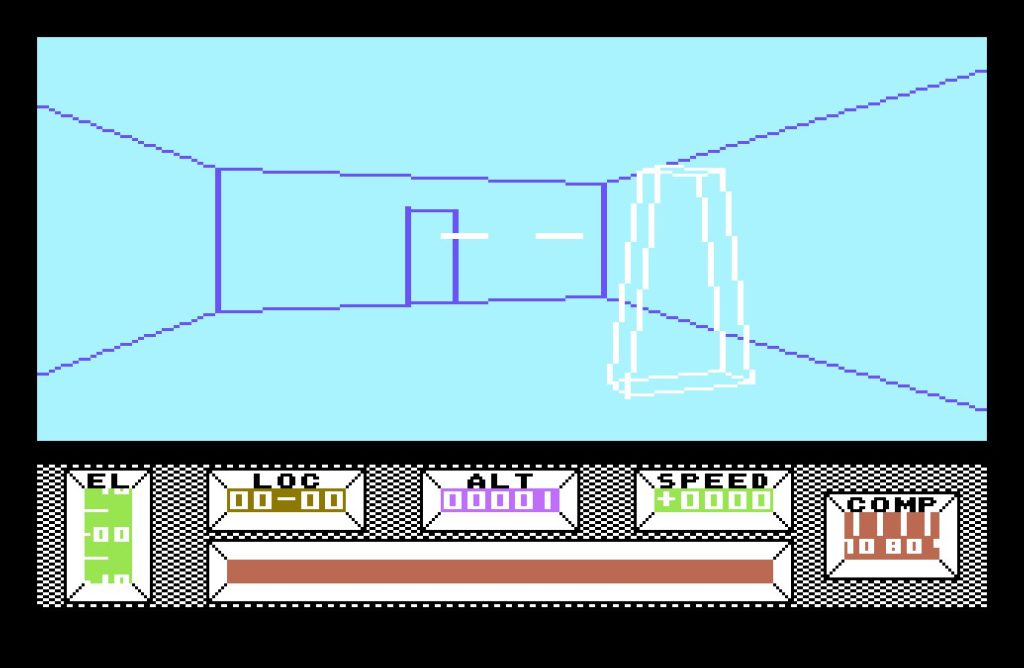
Beyond the city, the planet’s surface stretches into barren emptiness. A few distant locations exist, but reaching them requires a fast enough vehicle. Below the city, elevators lead to an underground complex, a labyrinth of corridors and rooms filled with items, keys, and secrets essential to aid you in your escape. Locked doors require specific keys, adding a layer of strategy to exploration, and rooms that transport you to a completely different area.
A True Open-World Experience
What sets Mercenary apart from its contemporaries is the sheer freedom it offers. Multiple escape routes exist, allowing for different approaches to completing the game. You can trade valuable items at the Colony Craft, a floating ship hovering high above the planet, but getting there requires a powerful enough ship. Alternatively, you can align with one of the two warring factions—the peaceful Palyars or the aggressive Mechanoids—and help destroy enemy structures. However, attacking a faction’s buildings will put you on their hit list, forcing you to evade retaliation.
A Personal Connection
I first played Mercenary on a friend’s Atari 800XL, and from the moment I saw the introduction, I was mesmerized. The problem? I had a Commodore Plus/4, which Mercenary wasn’t available for at the time. It wasn’t until 1987, when I got my Commodore 64, that I was finally able to own my own copy. Ironically, a Plus/4 version was released around the same time—and in my opinion, it was the superior version thanks to the system’s larger color palette and slightly faster processor.
I spent countless hours mapping the underground complex, cataloging every item and key location. My family didn’t share my enthusiasm—they found the game dull to watch. And perhaps they were right; Mercenary isn’t a spectator-friendly game. But the moment you take the joystick in hand, you’re drawn into its incredible world.
Even today, I’m amazed that programmer Paul Woakes managed to fit so much into just 64K of memory. Mercenary was ahead of its time, and still ranks as one of my all time favourite computer games. It’s still hard to believe that it’s 40 years old this year.
It’s also worth checking out The Second City, a dataset that can only be loaded from the main game, giving the player an entirely new challenging adventure in the eerie red dusk of Targ’s southern hemisphere.
